


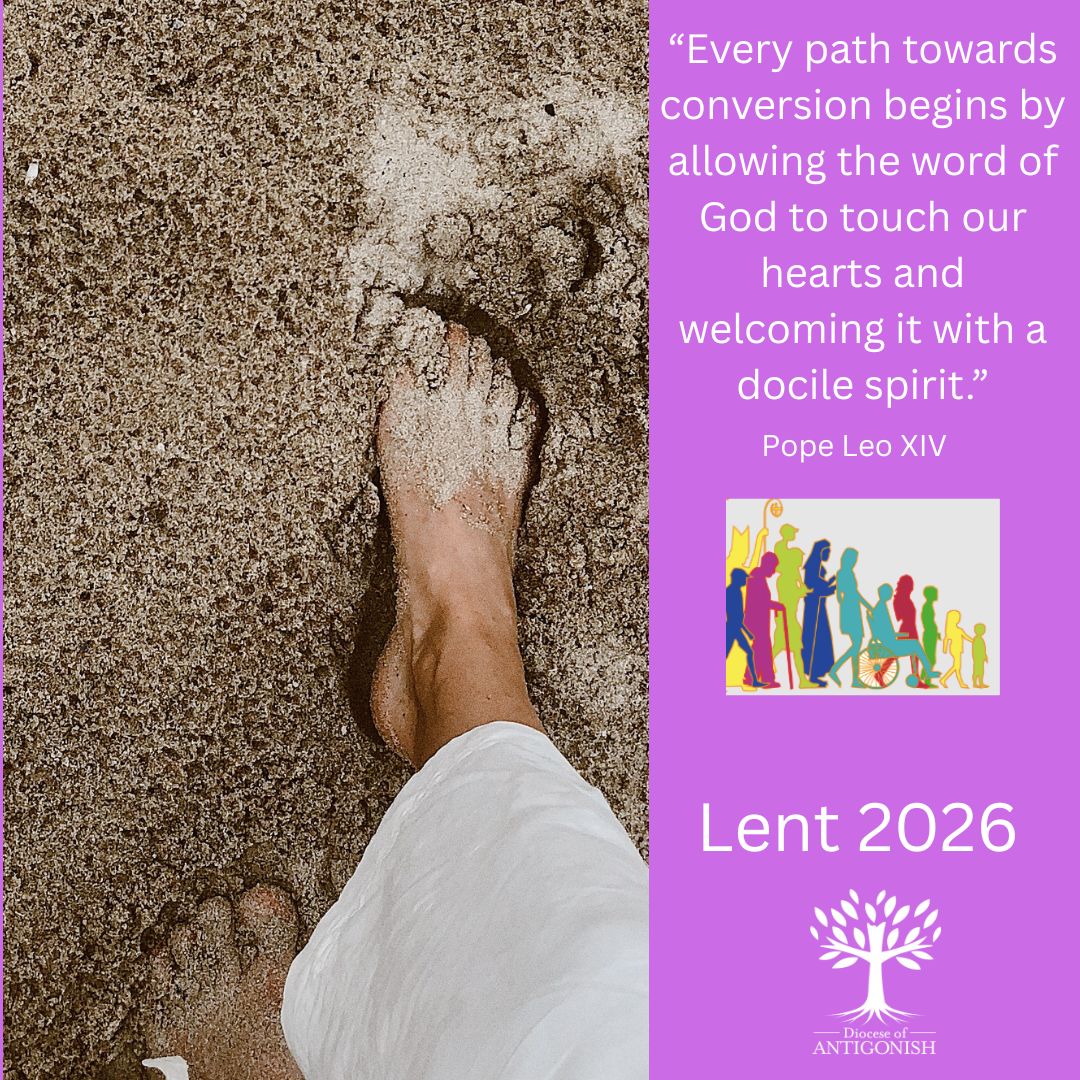

Ahead of the start of Lent, Pope Leo XIV invites us to open ourselves to listening, fasting, and community, and to abstain from words of hatred to make space for words of hope and peace.
–
“As we enter this Season of Lent, a time for reflection, repentance, and renewal, despite the issues in the world around us, we are filled with gratitude for the many blessings our Diocese has received and the rich history that shapes our faith journey together.” – Bishop Wayne Kirkpatrick
Pastoral Letter: Season of Lent 2026
My Dear Brothers and Sisters in Christ,
 As we enter this Season of Lent, a time for reflection, repentance, and renewal, despite the issues in the world around us, we are filled with gratitude for the many blessings our Diocese has received and the rich history that shapes our faith journey together.
Pope Leo XIV has proclaimed a special Jubilee Year of Saint Francis (10 January 2026 – 10 January 2027), coinciding with the 800th anniversary of the death of St Francis of Assisi. The Apostolic Penitentiary has issued a Decree granting the faithful a plenary indulgence for this year. The life of the Poor Man of Assisi shows that God’s mercy works in history through people who have opened their hearts to His action.
In a world marked by poverty, oppression, and inequality, we are called to action through this year’s theme, On Track for Justice, by supporting Development and Peace and walking hand in hand with communities in the Global South who are mobilizing to ensure their rights and the environment are respected. We are invited to give generously on Solidarity Sunday, the Fifth Sunday of Lent, to support the transformative work of Development and Peace in over thirty countries.
The 2025 Vatican document, “Pathways for the Implementation Phase of the Synod,” guides our diocese in implementing the Synod on Synodality’s final proposals by prioritizing dialogue, mutual listening, and the exchange of gifts. Pope Leo XIV said, “We are a missionary Church, a Church that builds bridges and encourages dialogue, a Church ever open to welcoming, like St. Peter’s Square with its open arms, all those who are in need of our charity, our presence, our readiness to dialogue and our love.” As a diocese, we are embarking on a Lenten Program to continue our Synodal journey and engage with our parishes and community as we focus on the Final Document – For a Synodal Church: Communion, Participation, Mission. Let us set aside time for shared reflections on the themes to be presented. Details will follow.
https://www.synod.va/content/dam/synod/news/2024-10-26_final-document/ENG—Documento-finale.pdf
May this Lent be a transformative time for us as we journey together toward Easter. With prayers for a blessed and fruitful Lent,
Fraternally in Christ,
+ Wayne Joseph Kirkpatrick
Bishop of Antigonish
–
Lenten Fasting
in the words of Pope Francis:
Fast from hurting words and say kind words.
Fast from sadness and be filled with gratitude.
Fast from anger and be filled with patience.
Fast from pessimism and be filled with hope.
Fast from worries and have trust in God.
Fast from complaints and contemplate simplicity.
Fast from pressures and be prayerful.
Fast from bitterness and fill your hearts with joy.
Fast from selfishness and be compassionate to others.
Fast from grudges and be reconciled.
Fast from words and be silent so you can listen.
—

 Lenten Reflections
Sheila O’Handley, Diocesan Hermit
Sometimes we find ourselves out of focus and missing the mark. At times we miss what is obviously right before us.
During the liturgical season of Lent, Christians throughout the world make a sincere effort to focus on the events in the life of Jesus of Nazareth, that led to his crucifixion.
Join me during Lent as I bring to memory, and into focus, some of the historical, cultural, social, and the religious circumstantial factors that hastened Jesus’ death.
Following these most tumultuous events in Jewish history, maybe not so unlike our own times, a small gathering of women and men experienced Jesus alive, and proclaimed – ‘He is alive and has risen from the dead’. This proclamation became the foundational core belief, from which the Christian faith was generated. It is the hope we live by.
—
Holy Week
Resurrection
 THE CYCLE OF LIFE
Life – Death – New Life
While death is an ordering principle in all life, deep in the human spirit is the longing for immortality – which is to deny death its triumph. That is what God’s fidelity to LIFE did in raising Jesus from the dead – which denied death its victory. It confirmed that God – the Source of LIFE – is a God of the living rather than of the dead.
What happened to Jesus in the Resurrection was not the re-establishing of the former physical bodily presence of Jesus of Nazareth – there was a change, there was a mutation, his bodily presence possessed and experienced SOMETHING different, SOMETHING more, and the MORE is not subject to space and time. It is the Subject of a PERSONAL EXPERIENCE – the logic of the heart rather than a statement of belief.
The Resurrection is an archetype within the human spirit that Jesus experienced, and is possible to all who have a living faith in the Mystery of Life we name God, or Source, or Presence, or as the Aramaic scholar Neil Douglas-Klotz expressed , the Parent of All. God has many names, and Jesus was one name for GOD, as are we, the names for God’s Presence in the world today.
We are the Presence of Resurrected Life when we…
Forgive
Act justly
Make peace
Welcome the stranger
Feed the hungry
End war
Enjoy life
Change
Our hearts know WHAT RESURRECTION IS…
Try this:
Stand erect: now stretch your arms out by your sides as far as you can… observe yourself; you are the resurrected cross…you are the archetype carrier of the logic of Resurrected Life.
Make Music: Alleluia! Alleluia! Alleluia!
Let each refrain carry PEACE into the world…
The world awaits this music.
—
Fifth Week of Lent
Keeping Vigil
 We are living stories. Often we mark these stories with vigil keeping. Vigil keeping is about life – some vigils are solemn and private, while others are public and can be solemn. The Buddhist monks of Fort Worth, Texas, with their peace dog Aloka, just completed their vigil walk for peace from Fort Worth to Washington D.C.
As a country we participated, virtually for most of us, along side our Government leaders, in a candlelight vigil, to be present with, and to support the families, the community of Tumbler Ridge, BC, and a country in mourning, the result of a deadly school shooting.
Keeping vigil is important. It speaks to and draws attention to matters of the heart. As we move closer to the final week of our Lenten reflections, we call attention to the vigil-keeping at the Roman execution of Jesus.
The Gospel of John (19:25-27) identifies the participants of this vigil: Mary the mother of Jesus, who would have been a relatively young widow at the time; Mary Magdalene, friend of Jesus, whom Jesus loved, and a disciple, John. Recent biblical research, however, seems to indicate, and it would seem to make sense, that it was James, the brother of Jesus that stands with his mother Mary in support and vigil keeping – and also another woman, Mary, the wife of Clopas and sister to Mary of Nazareth.
This vigil keeping took place during the height of the Passover festivities, a family feast of remembrance…freedom from Egyptian slavery and the birthing of Israel as a Nation. For this particular Jewish family, no festivities…instead a vigil watch that was fraught with heartache, with uncertainty, and with fear.
The emotional heartache of the untimely death of a child is excruciating; such was Mary’s heartache – there is no human ache like it, it is beyond words. The loss of mutual love between friends, as was the love between Jesus and Mary Magdalene, surely quivered with grief in her heart. John, or be it James, over shadowed now by the agonizing lost of hope that they had anticipated in Jesus’ leadership, and his proclamation that something new was arriving for the restoration of their home land – stood firmly with all three Mary’s.
This particular death watch of Roman execution by crucifixion was ugly and deplorable. Political tensions, fears, suspicions, betrayals, and staying undercover during a Roman execution was the rule of the day. To be seen in the public arena or in the after math of such an event, would be an action equal to putting your life on the line; you would be marked as one who befriended the victim, and or manifested a critique and or disloyalty to the Roman occupiers of Israel. Given this political reality it was indeed an act of filial courage and love for these vigil keepers to dare approach the execution of Jesus.
Mingled with the heartache and fears, there also loomed great uncertainty: who would attend to the traditional ritual preparation of the body for burial, and where to bury Jesus, when seemingly, out of fear, all had disappeared into hiding; what would become of Jesus’ mission, the movement he inaugurated? Who would assume leadership? What role would these faithful vigil keepers play, if any, especially the two most important women in Jesus’ life – his mother Mary, and Mary Magdalene his soul friend?
We know that James, Jesus’ brother, continued Jesus’ vision within the Jerusalem community and was stoned to death in 60AD. It is difficult to believe that the two prominent Mary’s were not actively involved in the early days of the Jesus Movement, influencing the birthing seedlings of Christianity. The canonical scriptures are quite silent with respect to both women following the death of Jesus. Mary the mother of Jesus appears in Acts 1:14 for the Pentecost experience and the days following; Mary Magdalene is mentioned in all four Gospels as witness to the Resurrection, and commissioned by Jesus, “go and find the brothers and tell them…” John 20:17-18.
Was that it? No, there was more to tell…not then but now.
There are times when history attempts to correct itself, to fill in the missing parts as it were, and we welcome these efforts. Author James D. Tabor has attempted to right Mary’s place and role in her son’s life in his 2026 published book, The Lost Mary: Recovering the Mother of Jesus.
Both author Cynthia Bourgeault, in her book The Meaning of Mary Magdalene: Discovering the Woman at the Heart of Christianity, and author Bruce Chilton in his book Mary Magdalene, offer a rightful place, role and a corrective of the most misunderstood woman companion of Jesus.
During this Fifth Week of Lent there are many vigils stories lingering in our hearts.
Let us spend some time in silent reflection with the vigils of our heart.
–
Fourth Week of Lent
The Heart Knows
 The focus of the fourth week of Lent is the heart. The heart is the pulse of life – the creative life energy of Divinity housed in the human spirit. The heart beats approximately 85,000 to 100,000 times a day…no time off, no coffee breaks.
Hildegard of Bingen, the 12th century Benedictine German mystic, called the heart our original wholeness. All major religious traditions agree that the heart is an organ of perception that accesses wisdom beyond the confines of the rational mind. It is the feminine voice, the feminine principle of intuitive wisdom in both women and men. It can also be put this way: the wisdom of the heart is a felt-sense of a numinous encounter with the Sacred Source of Life that advances human consciousness.
Research conducted at The HeartMath Institute in California, USA, by Dr. J. Andrew Armour, states “that the heart basically has its own intrinsic brain – the heart brain. We now know that the heart is sending more information to the brain than the other way around, and that the heart responds to things even before the brain does”.
The HeartMath Institute underscores that a healthy heart – heart coherence, is the heart that has achieved balance between the sympathetic and parasympathetic nervous systems. Heart coherence also occurs when one lives in harmony with one’s heart-values – putting life in right order. Related research on the heart has also proven that a heart in coherence, in balance, can affect the hearts of others near by, and is not unrelated to both psychological and spiritual growth and development.
Jesus was not aware of the research at the HeartMath Institute. However, he was about the awakening, and the aligning of the heart’s intuitive wisdom… his heart and the hearts of others. His heart coherence attracted others, initially a few followers during his life time. Then following his death, the Jesus Movement, which was anchored in the felt sense of Jesus’ resurrected presence, moved forward into the surrounding geographical areas, and which eventually gave birth to the religious movement known today as Christianity.
However, let us not be so naïve as to think or even believe that Jesus had it all together; he didn’t… he had to grow into heart coherence like the rest of us: He grew in wisdom (Luke 2:52) … he learned to trust amidst doubt, fear, and abandonment… (Luke 41:44) (Mark 15:33-34) … he endured betrayal and denial by his closest friends (Matthew 26:69-71) (26-14-16) … he adjusted to misunderstanding and rejection from his local home of Nazareth (Luke 4:16:30) … he sought comfort, safety, and friendship in the home of Martha, Mary and Lazareth (Luke 10:38) …he loved Mary Magdalene (John 20:11-18), and he lingered in nature, in prayer, and solitude discerning his course of life (Mark 1:35) (Matthew 4:1-11).
Achieving heart coherence activated by the feminine voice of wisdom does not come easily. It demands alchemy of the heart, it demands a change in consciousness, it demands a new world order, it demands a new internal operation system called LOVE, and its verbing companions – peace making, justice making, forgiving … the hearts knows.
Jesus attained resurrection through heart coherence – LOVE, not through Roman crucifixion.
During the Fourth Week of Lent take some time each day to be with your heart :
- What did you notice…
- What are you resisting…
- What is calling you…
Thank your heart…
—
Third Week of Lent:
Supper Turned Upside Down
 Who among us has not looked forward to an invite: to a lunch, a dinner, a supper, or just a cup of something, with a cherished friend. It warms the heart and it bestows a blessing, until the next time.
Food and gathering in community are archetypical needs of the human spirit. They make us equal. Without these two basics of life, we die, either one way or another – psychologically, physically, or spiritually.
Observing the teachings and actions of Jesus, we notice stories about dinners, about suppers, and banquets. And there are many. We might ask, what was it about meal-taking that attracted Jesus?
Author Beatrice Bruteau, in her book – The Holy Thursday Revolution, weaves together theology, psychology, and the political, and offers a powerful explanation of the two simple gestures of Jesus – the Foot Washing, and the Sharing of Bread and Wine, that turned a supper upside down – then and now.
Washing feet was a familiar and practical act of hospitality and of welcoming, offered to guests in a country of unpaved roads, of hills and valleys. In the time of Jesus, Roman domination ruled the day, so it was the servant-slave who washed the feet of the guests, not the host.
The author, in drawing attention to the two actions of Jesus, contends that Jesus’ actions demonstrated a needed reversal of the servant-lord paradigm of domination. Her conviction is that the Suppers of Jesus inaugurated the Kingdom of God. A new paradigm had arrived, a Communion Paradigm of Friends, and with it a new way to live together.
At supper, what does Jesus do… he shows the way by assuming the role of servant…not of lord. He washes the feet of his companions. Peter resists. Not being quite sure if his companions understood what had just transpired in the washing of feet – the reversal of the servant – lord paradigm, Jesus asked, “do you know what I have done to you?” He proceeds to make it clear and confirms friendship: “I no longer call you servants but friends”. (John 15:15) A friendship of right relationship is established.
The author’s explanation of Jesus’ insistence that we are friends, that we are equals, is rooted in a theology and of psychology of a Metaphysics of Divine Love: “Let us make humankind in our own image, in the likeness of ourselves…” (Genesis 1:26.) The logic of this metaphysics of love is what defines us as persons. We all are of God; we live within the Divine Paradigm of Love, equal in dignity to everyone else. Everyone is invited to the Supper of the Kingdom – the Community of God.
The second gesture of Jesus, the sharing of bread and wine as presented by the author, is stilling in its archetypical simplicity – the need for bread, to share, to eat, and to nurture one another. While the invite, take and eat, take and drink, and do this in memory of me, is profound. It is also profoundly costly. It is a radical reversal of patriarchal dominance that has dominated human kind for far too long.
Our invite is to live and act from inside the Holy Thursday’s paradigm of Communion and Friendship until we right the evils of patriarchal injustices – economically, politically, culturally, personally, and religiously – manifested in societal structure and institutions today. And when the work of Holy Thursday’s Supper is completed, “God will put on an apron, sit us down at the table, and wait on us”. (Luke 12:38)
Jesus shows us how to live and how to die at a supper.
the table
come to the supper
to the table of plenty
carved from the tree of life
all are invited to this table
come
drink from the cup of life
wine
distilled from the grapes of life
savored
with joy
with sorrow
at this table
come
eat bread
kneaded from the embryo of life
enough for all
at this table
come
share secrets
broken hearts are mended
future dreams gestate
creativity out runs the imagination
at this table
come to the supper
to the table
the table of life
love is the life blood that flows there
we are defined by love
at this table
we are one
we are – the Christ
Actions you might consider
Prepare a meal and invite someone to share it with
Give a donation to the food bank
Make a loaf of Bread
Share a bottle of wine
A Book to Read
The Holy Thursday Revolution – author Beatrice Bruteau
—
Second Week of Lent:
A Charge of Blasphemy
 Last week we offered a brief sketch of the escalating political temperature in Jerusalem. Once Jesus enters the public scene gathering followers, proclaiming news about a kingdom, and acting in uncustomary ways socially, culturally and religiously, he quickly becomes subject of suspicion.
It was rumored that he might just be the expected messiah, the King of the Jews, the deliverer who would free the Jewish people and their occupied land from Roman domination. It was indeed a very disordered and messianic anticipatory time of great hope and of great despair for Israel.
Early in Jesus’ ministry he encouraged the pursuit of truth – “learn the truth and the truth will make you free” (John 8:32). Truth is an innate companion of the human psyche/soul, and of the collective unconscious. It is twin sister to justice. When we attend to the soul’s truth we stand in our own personhood and become truth-tellers.
Our focus this week is a two-fold blasphemy charge that befell Jesus. One was political, the other was religious. Both were about truth and truth telling, as recorded in the Gospels of John (18:33-40 and19:1-22) and Matthew (26:57-68).
It is Passover time in Jerusalem, the feast of feasts for the Jewish people – the Exodus – their freedom from the bondage of Egypt – thousands of Jewish pilgrims making their way to the occupied Holy City. Jesus does also, as he usually did as a practicing Jew, and a few of his disciples accompanied him. It would be his final pilgrimage.
Jesus went to Jerusalem fully aware that both Herod Antipas, overseeing Galilee, and Pilate, the governor of Judea, had been informed of his talks about a Kingdom, that the reign of God is near, about his disruptive action in the Temple, his claim of divine intimacy, and his company of followers, all of which heightened the paranoid fear of political threat, and the rising concerns about an insurrection.
Given the crowds that were now approaching in pilgrimage to Jerusalem, and amid increasing political unrest, the local Roman leaders and the Jewish appointed leaders – the Sanhedrin – feared an eruption of a massive insurrection. To squash this mounting fear, the high priest Caiaphas, as a security precaution, ordered the Sanhedrin to arrest Jesus on the grounds of religious blasphemy.
Thus began a shuffling of Jesus’ back and forth confrontations with Pilate, to Herod Antipas, and then back again to Pilate – the coward, the crowd pleaser, and the accommodating partner of the Roman occupiers. He finally condemned Jesus to death.
The charge of blasphemy certainly became a life and death issue of religious-political proportion for Jesus.
Pilate puts the political question to Jesus – Are you the King of the Jews?
A native king would indeed be a threat to the Roman Empire and Roman governing officials in Jerusalem. Even more threating would be the vision – the new social order that Jesus proclaimed – that the kingdom of God is at hand… has come upon you…and is in your midst… that the greatest among you become as the youngest, and that the leader as one who serves…that whoever would be great among you must be your servant, and whoever would be first among you must be slave of all. Actually, this was a nightmare for the dominator – the Roman Empire.
Jesus’ response to Pilate – “It is you who say it” … “Yes, I am a king”. No defensive, theatrical performance here, only the truth, and his moral clarity of the Kingdom of God – the reign of Divine governance initiating a new world order.
Caiaphas’ religious question to Jesus – Are you the son of God? The concern here that surfaced for the Jewish leaders – the Sanhedrin – was a religious one. Claiming identity, intimacy with Yahweh-the Divine One, and possessing divine authority was considered blasphemy, even sacrilegious, within Jewish religious sensitivities.
Jesus’ response to Caiaphas… “The words are your own”. No succumbing to personal safety here, only truth telling steeped in his experience of intimacy with Yahweh – the mutual indwelling of Abba-Father and son relationship.
Standing for truth, speaking truth to power, can have you killed. Speaking truth had Jesus crucified.
Reflection:
This week Lent invites us to attend to the soul’s companion – TRUTH.
What would it mean this week to show up for truth?
Spend reflective time with the related Scripture: John 18:33-40 and 19:1-22.
Matthew 26:57-68
—
First Week of Lent:
History is not an Innocent Bystander
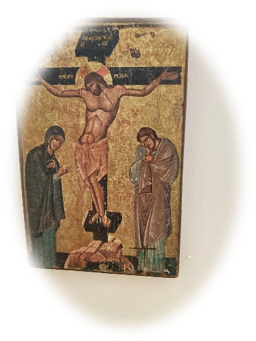 The first week of Lent will focus on the political climate within Roman preoccupied Jerusalem, at the time of Jesus of Nazareth. History is seldom neutral. It is not an innocent bystander, especially political history.
When Jesus arrives on the scene, following the death and departure from his cousin mentor John the Baptist, a gathering, a mingling of followers joined him. These followers wondered if Jesus might be the Messiah that the Jewish people longed for. What they longed for were the days of King David’s reign. The Jerusalem of that time was the capital of Israel, and its people lived in an environment of relative peace, righteousness, justice, and unity. The Jerusalem now, of Jesus time, and its people, were an oppressed people and Nation, subjugated by the Roman Empire. They now urged for the Messiah.
Messianic expectation had reached a feverish height in Jerusalem once again. It was a political powder keg waiting to be ignited. Rumors of insurrections, and the buzz that the rightful King of the Jews as prophesized by the Prophets – Isaiah, Jeremiah, Micah and Daniel, was close at hand.
Tensions, suspicions, and paranoid fear sieged the Roman appointed dynasty of Herod the Great, his four sons, Aristosulus, who he had killed, Archelaus, Antipas, and Philip, and their puppets Pilate, the governor of Judea, Caliphas, the high priest, and Annas a former high priest …actually, they all were puppets of the Roman Empire. The mere thought of a ‘King of the Jews’ emerging from among the local people was a motivating factor to activate structures and policies of high alert, in order to maintain political stability and loyalty to Rome within occupied Jerusalem.
To add fuel to the paranoid fear, neither Herod the Great, his sons, nor his extended family descended from Israel’s ancestral covenant with Yahweh-God, nor did they possess the necessary ancestral Davidic birthright to claim the righteous title ‘King of the Jews’. And so, King Herod and his sons murdered anyone, even family members, schemed and married and intermarried in an attempt to acquire legal ancestral rights of the House of David.
Amid such political threat and upheaval, any one person or group thought to be planning an insurrection or proclaiming themselves as the ‘King of the Jews’ were viewed as an act of rebellion against Rome, and so they were sought out and murdered, murdered by the cruellest of Roman methods – crucifixion.
Crucifixion, a death penalty of prolonged agony, and at times taking three to five days to actually die. Bodies were stripped naked – an exposed body was offensive and disrespectful to both the land and the religious sensitives of the people of Isreal. Usually, bodies were left for days to die from dehydration, exposure, while being picked clean by wild animals, insects, and birds. These gory details were not spared, nor were they hidden from view, but acted out in public as a warning, as a deterrent, and to incite fear among the people. The public crucifixion made it clear: this is your lot if you try to replace the Herodian dynasty, or any expression of Roman tyranny.
This was the volatile political zeal of Judaism, manifested in and around Jerusalem that Jesus encountered, confronted, and which hunted him, eventually and expediently had him arrested, mocked in trial as ‘King of the Jews’, convicted him of blasphemy, and had him crucified – a political upstart, an insurrectionist. No theology here: just the intricacies of power politics.
Reflective Suggestions
During Lent let us hold before us the political environment that contributed to Jesus’ death
This week tune in to the power politics of today – are they are life enhancing or divisive
Decide to read one of the Prophets during Lent – the truth tellers and vision makers
or
Rabbi Jesus: author Bruce Chilton
–
